
(403) 620-8489
Water from a burst pipe, flooded basement, appliance leak, roof leak, or sewer backup can travel into flooring, drywall, insulation, and stored belongings before the full extent is visible.
Nonstop Restoration provides 24/7 water damage restoration in Chestermere with extraction, moisture detection, structural drying, and clear documentation. We work to control the loss and reduce secondary damage.
Call (403) 620-8489 for emergency water damage help in Chestermere.

Chestermere properties can face water damage in every season. Freeze-thaw conditions and frozen plumbing can lead to pipe failures, while basement seepage, sump pump problems, appliance leaks, and roof leaks may affect finished spaces and storage areas.
Do not assume hidden materials will dry on their own. Water can move behind walls and under flooring, increasing the risk of swelling, odour, and mold. Fast extraction and measured drying help limit the damage.
Homeowners call when a basement, bathroom, kitchen, utility room, or storage area takes on water. Property managers need affected units assessed, dried, and documented. Businesses need a plan that protects operations and unaffected spaces.
People choose Nonstop Restoration for emergency response, moisture readings, clear updates, and documentation that supports the restoration and insurance process.


Water damage work is handled by trained restoration technicians using IICRC-guided methods, extraction equipment, moisture meters, air movement, and dehumidification.
The team protects unaffected areas, monitors drying progress, records moisture conditions, and explains when damaged materials may need removal or repair.
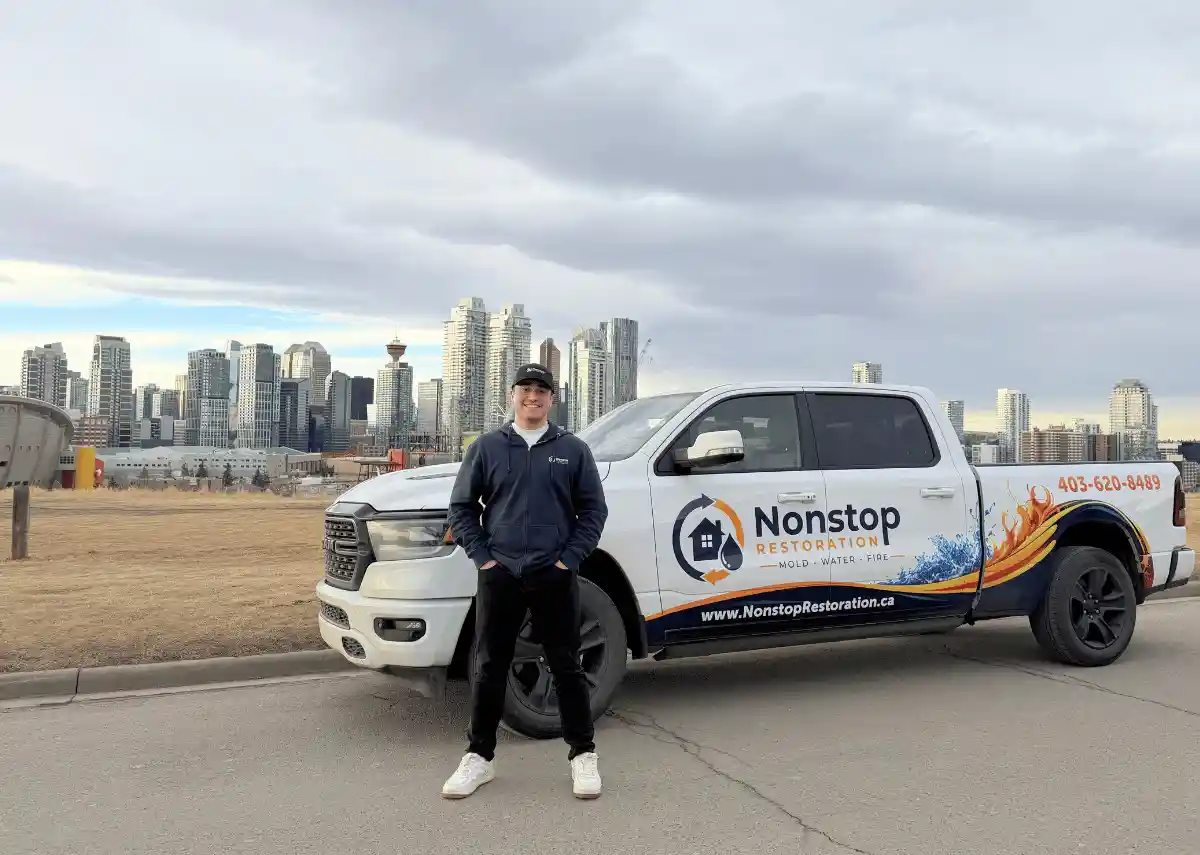
The process starts with an emergency assessment. We identify the source, inspect visible and hidden affected areas, and begin extraction where standing water is present.
Moisture meters, air movers, and dehumidifiers are used to dry the structure. Conditions are monitored until suitable drying goals are reached, then required repairs can move into the restoration or rebuild stage.

Nonstop Restoration follows IICRC-guided water-damage methods and uses Xactimate for estimates. Photos, moisture readings, the work scope, and progress notes are organized for the restoration file.
We do not guarantee coverage, but clear documentation can help the property owner and adjuster review the loss and completed mitigation.
Water damage restoration may connect with flooded basement cleanup, sewer backup cleanup, mold remediation, content manipulation, structural repairs, and rebuild services.
Emergency calls are answered 24/7. Response timing depends on crew availability, road conditions, and the type of loss, and the team will give you clear next steps when you call.
If it is safe, stop the water source and avoid electrical hazards. Move people and pets away from affected areas, then call for an assessment before disturbing wet materials.
Yes. The process may include water extraction, removal of unsalvageable materials, moisture mapping, air movement, dehumidification, and ongoing drying checks.
Mold risk increases when materials stay wet. Starting extraction and structural drying promptly helps reduce that risk, especially in hidden wall and flooring cavities.
Coverage depends on the source of water and your policy. We can provide photos, moisture readings, estimates, and service notes, while the insurer makes the coverage decision.