A wall can feel dry while moisture remains inside the assembly. Restoration technicians assess drying through material measurements, inspection and recorded progress, rather than deciding from appearance or the number of days equipment has been running.
For a Calgary homeowner, the useful question is: what evidence supports the decision to stop drying and move into repairs? A clear answer should identify what was wet, where it was checked and what the final readings mean.
Drying begins with a record of the affected materials
The first assessment establishes the extent of the water loss and identifies materials that need further investigation. Flooring, wall finishes, framing and concealed spaces may require different checks. A wet carpet does not describe the condition of the subfloor beneath it.
A moisture map gives the team a consistent set of locations to revisit. Instead of recording only that a room is “improving,” the documentation can show how particular materials and measurement points change. Ask whether spaces behind finishes or below flooring are included in the assessment where relevant.
Extraction and drying are parts of professional water damage restoration. They should be considered alongside the source of the water, contamination and the condition of the building.
Moisture readings need material-specific interpretation
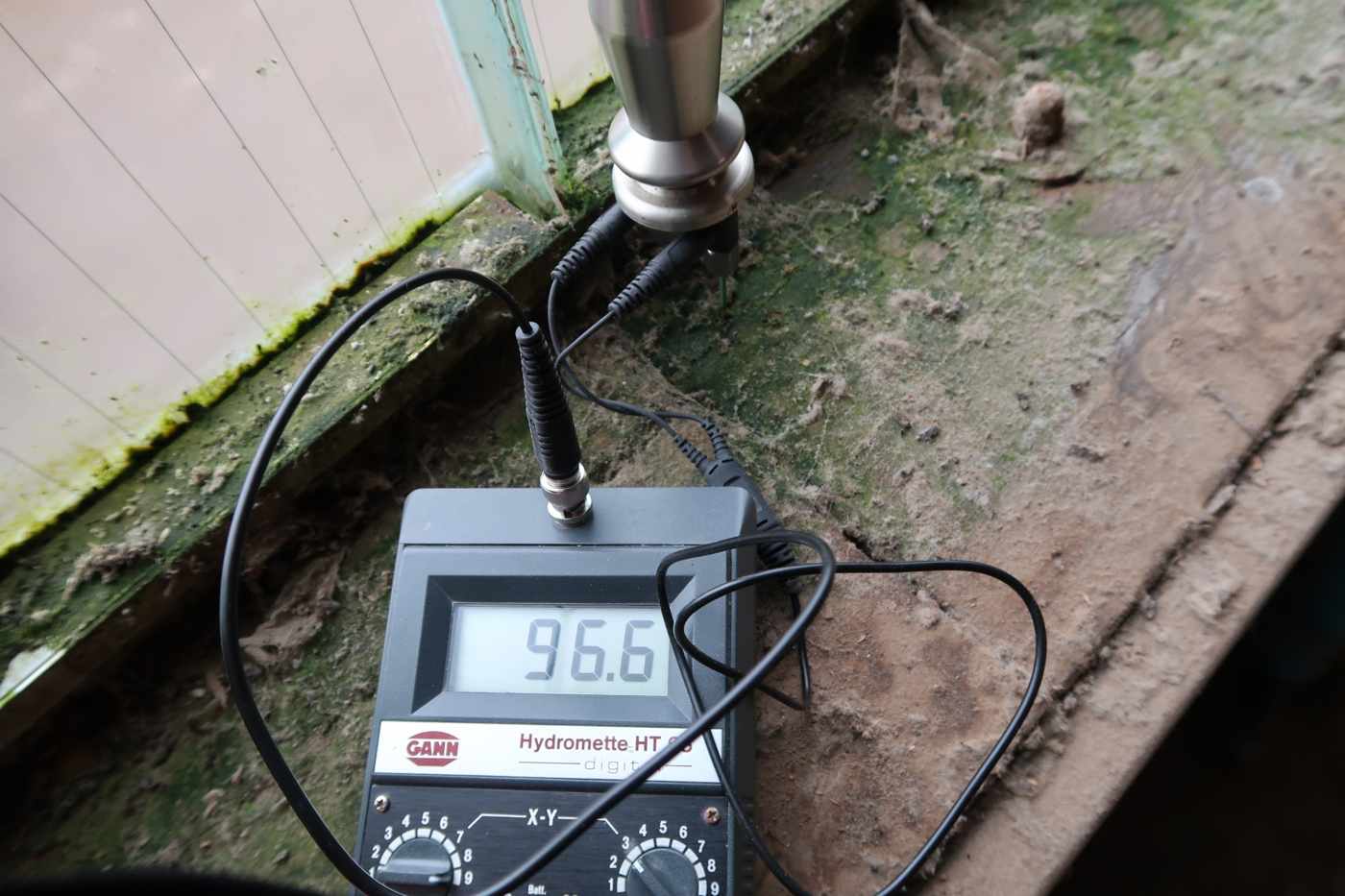
There is no single moisture-meter number that proves every building material is ready for repair. Meter type, measurement mode and material affect the result. A reading expressed as wood moisture equivalent is not automatically the actual moisture percentage of drywall or concrete. Salts and other material characteristics can also affect interpretation.
A suitable comparison with unaffected material helps put findings in context. Comparing like materials is more useful than comparing a wet timber member with a different finish elsewhere in the building. Wood species can affect calibration, so even readings within the same broad material group need care.
Ask the technician what reference and drying goal apply to the material being assessed. A number without that explanation is difficult for a homeowner or adjuster to evaluate.
Thermal imaging helps locate areas for closer checking
A thermal camera shows temperature patterns. Some patterns can indicate an area worth investigating for moisture, but the image alone does not confirm that a material is wet or dry. Targeted moisture measurements help verify what the camera suggests.
This distinction matters when an image looks reassuring but part of the assembly was never measured. It also matters when a cool patch has another explanation. The report should distinguish a screening observation from a confirmed moisture finding.
Thermal imaging can support inspection; it should not be presented as a photograph that sees every hidden problem.
Air conditions and repeat measurements show progress
Temperature and humidity information help explain the drying environment. Material readings show what is happening in the structure itself. Both contribute to the assessment; comfortable room air does not, by itself, demonstrate that every affected material has reached its drying goal.
Repeat checks are most useful when the locations and methods remain identifiable. If an area is not progressing as expected, ask what additional inspection or change in the drying plan is needed. The IICRC S500 overview includes inspection, drying technology and project documentation within professional water damage restoration.
For a lower-level loss, basement flood restoration also needs to account for the affected finishes and the route water took through the space.
Ask for the drying handover before reconstruction
Before new finishes conceal an area, request an explanation of the final condition. Useful questions include:
- Which affected materials were measured, and where?
- What comparison or drying goal was used?
- Were any spaces inaccessible or excluded?
- What materials require removal or additional work?
- What records support the move into repairs?
Drying completion is not a blanket clearance for contamination, asbestos or structural damage. Those concerns require their own assessment when present. Agreeing on the handover avoids treating one completed stage as approval for every remaining task.
Get a clear assessment of water damage in Calgary
Call Nonstop Restoration at (403) 620-8489 for 24/7 emergency restoration response in Calgary. Our IICRC-certified team provides water damage restoration and documentation to support adjuster review. Ask what the assessment covers and what evidence will guide the next stage. Your insurer determines coverage under your policy.